You may have the best strategy in place to get your company back into the market and increase the share price, but even the best strategy is a commodity unless you effectively implement it. Many big companies over a period of time get entangled in a web they themselves spun and this is when their CEO decides on renewing... Continue Reading →
What FTX’s Collapse Teaches Us About Startup Governance โ And Why Nobody Saw It Coming
FTX collapsed in November 2022 with $8.9 billion in customer funds missing. The governance failures weren't hidden โ they were hiding in plain sight
The Web3 Reality Check: What the NFT Crash Is Actually Teaching Us
NFTs seemed like the future in 2021. By mid-2022, the narrative is crumbling. Here's what the hype cycle is really revealing about Web3's signal and noise.
Understanding the AI Gold Rush: Opportunities and Risks
ChatGPT has triggered an entrepreneurial frenzy. Thousands of startups are launching. Most are building wrappers. Here's how to tell the signal from the noise.
Beyond the Chatbot Moment: Where Generative AI Is Actually Creating Enterprise Value
The ChatGPT excitement is real โ but enterprise value from generative AI looks nothing like a chatbot. Here's where the genuine transformation is already underway.
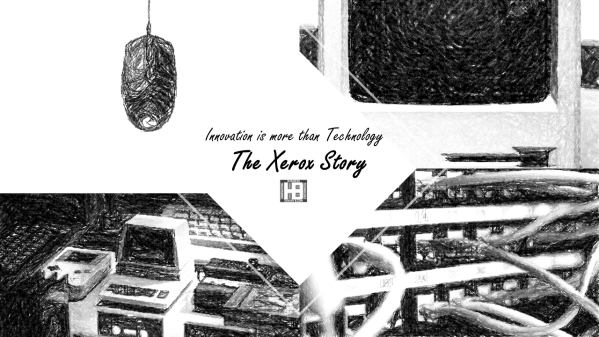
Innovation is more than Technology – The Xerox Story
In the 1970s, Xerox's Palo Alto Research Center (PARC) developed the first personal computer, the Xerox Alto. The Alto was the first computer to feature a graphical user interface (GUI) with a mouse and a desktop metaphor, which are now standard features of modern computers. However, Xerox failed to commercialize the technology, and it was instead popularized by Apple, who introduced the Macintosh in 1984. The reason for Xerox's failure was primarily due to the company's focus on its core business of copying and printing, and a lack of understanding of the potential of the personal computer market. Xerox's management at the time did not see the potential of the technology and did not invest in its development. They also did not recognize the potential of the GUI and mouse-based interface, they were more focused on developing the technology for their core business of copying and printing. Additionally, Xerox was not able to capitalize on its innovation because it was not able to create a business model for the personal computer market. The company did not have the distribution and marketing capabilities to compete with companies like Apple and IBM, which had already established themselves in the personal computer market.
Atomic Habits: An Easy & Proven Way to Build Good Habits & Break Bad Ones
Atomic Habits emphasizes the importance of small changes in daily habits and how they can compound over time to bring significant improvements in overall life. The book provides a framework to identify and change habits, create an identity through habits, and stick to them by creating a culture of habits in personal and professional life.
The Hard Thing About Hard Things: Building a Business When There Are No Easy Answers
Ben encourages you to be prepared for difficult times and to never give up on your goals. The book 'The Hard Thing About Hard Things: Building a Business When There Are No Easy Answers' is a valuable resource for anyone looking to start or grow a business and wants to gain a better understanding of the challenges they may face and the strategies they can use to overcome them. It provides insight into how to navigate through difficult times, how to make difficult decisions, how to find and hire the best people, how to build a strong team culture, how to improve communication within a team, and how to be an effective leader.
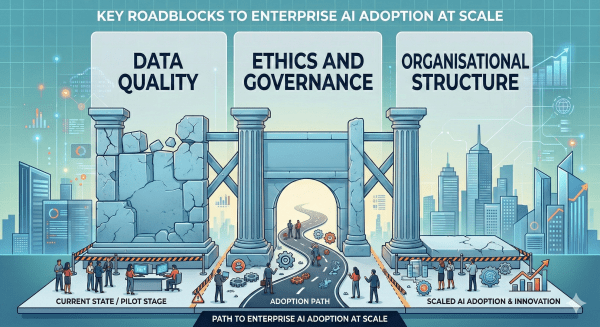
The Unglamorous Foundation That Makes Everything Else Work: Why Data Governance Deserves the Boardroom
AI gets the headlines. Data governance does the actual work. Here's why the least exciting discipline in enterprise technology is also the most important one.
Why a Funding Crunch Is the Best Thing That Ever Happened to Lean Startup
Capital scarcity is doing something useful โ forcing founders back to lean discipline. Build, Measure, Learn has never been more relevant than right now.
The Innovation Ambition Matrix: Why Most Organizations Are Investing in the Wrong Kind of Innovation
Most organizations over-invest in incremental improvements and under-invest in transformative ideas. The Innovation Ambition Matrix reveals exactly why โ and what to do about it.

You must be logged in to post a comment.