FTX collapsed in November 2022 with $8.9 billion in customer funds missing. The governance failures weren't hidden — they were hiding in plain sight
What FTX’s Collapse Teaches Us About Startup Governance — And Why Nobody Saw It Coming

Learning is forever
FTX collapsed in November 2022 with $8.9 billion in customer funds missing. The governance failures weren't hidden — they were hiding in plain sight


NFTs seemed like the future in 2021. By mid-2022, the narrative is crumbling. Here's what the hype cycle is really revealing about Web3's signal and noise.


ChatGPT has triggered an entrepreneurial frenzy. Thousands of startups are launching. Most are building wrappers. Here's how to tell the signal from the noise.

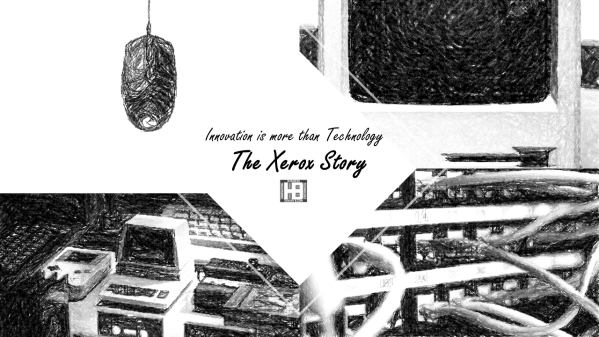
In the 1970s, Xerox's Palo Alto Research Center (PARC) developed the first personal computer, the Xerox Alto. The Alto was the first computer to feature a graphical user interface (GUI) with a mouse and a desktop metaphor, which are now standard features of modern computers. However, Xerox failed to commercialize the technology, and it was instead popularized by Apple, who introduced the Macintosh in 1984. The reason for Xerox's failure was primarily due to the company's focus on its core business of copying and printing, and a lack of understanding of the potential of the personal computer market. Xerox's management at the time did not see the potential of the technology and did not invest in its development. They also did not recognize the potential of the GUI and mouse-based interface, they were more focused on developing the technology for their core business of copying and printing. Additionally, Xerox was not able to capitalize on its innovation because it was not able to create a business model for the personal computer market. The company did not have the distribution and marketing capabilities to compete with companies like Apple and IBM, which had already established themselves in the personal computer market.

AI gets the headlines. Data governance does the actual work. Here's why the least exciting discipline in enterprise technology is also the most important one.


Ethereum's transition from Proof of Work to Proof of Stake isn't just a crypto milestone. It's a masterclass in evolving large-scale distributed systems without breaking them.


The debate has shifted from "should we move to cloud?" to "how do we govern multi-cloud complexity?" Cloud-native architecture is now the enterprise baseline — not the edge.


Web3 isn't just NFTs. The real opportunity — and the real challenge — lies in the infrastructure layer. Here's what the technology stack actually reveals in 2022.


The best innovators aren't chasing every idea — they're managing a disciplined portfolio. Here's the framework separating winners from the rest in 2022


I get asked quite often to explain bitcoin, and I felt for knowing and understanding bitcoin you need to understand the basics and not just the transactional aspects of bitcoin. So here is my version of BITCOIN-101. 1-MONEY, BANKING, TRANSACTIONS. If you know BITCOIN and you are questioning bitcoin, it's because you have never really... Continue Reading →


 harish.balasubramanian
You must be logged in to post a comment.