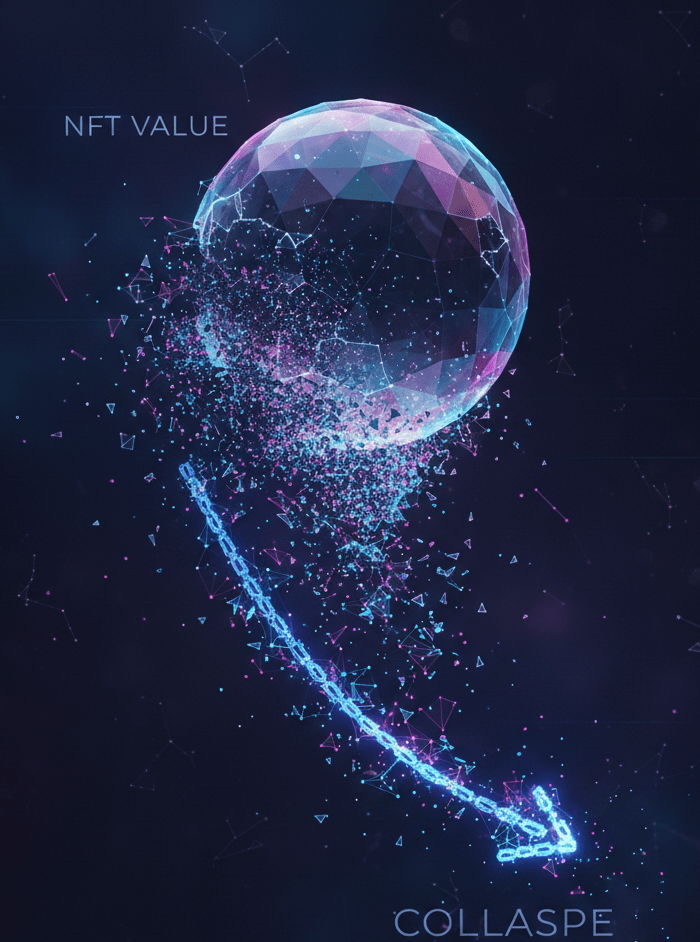
In 2021, NFTs felt like an inflection point. Digital ownership. Blockchain-based scarcity. Artists monetizing directly without intermediaries. The narrative was compelling — and for a moment, it seemed like the future was arriving ahead of schedule.
By early 2022, that narrative is visibly crumbling. And that’s worth paying close attention to.
A Masterclass in Hype Cycles, Playing Out in Real Time
What’s unfolding in the NFT market right now is a near-perfect illustration of the Gartner Hype Cycle — the familiar arc from technology trigger to peak inflated expectations, and now, rapidly, toward the trough of disillusionment.
The core dynamic is straightforward: most NFT transactions in 2021 were speculative. Buyers weren’t acquiring NFTs because of authentic, durable use cases — they were buying because they expected the next buyer to pay more. The moment market psychology shifted — when the expectation of automatic appreciation softened — the speculative appeal evaporated almost immediately.
This is how bubbles work. Not with a slow leak, but with a sudden loss of narrative confidence.
The Question 2022 Is Forcing Web3 to Answer
What’s emerging now — and this is arguably the most important development in the Web3 ecosystem this year — is use case clarity. The sorting has begun.
Which blockchain applications have genuine utility? Which are pure speculation dressed in technological language? 2022 is where those two categories are starting to visibly separate, and the distinction matters enormously for anyone operating in or adjacent to this space.
The applications worth watching are those solving real problems that existing infrastructure genuinely cannot — cross-border settlement, provenance tracking, decentralized identity, smart contract automation in industries with high intermediary costs. These are areas where blockchain’s properties (immutability, decentralization, programmability) provide authentic advantages over alternatives.
The applications losing credibility fast are those where the blockchain layer adds complexity without adding value — where the honest answer to “why does this need to be on-chain?” is “because it made the fundraise easier.”
The Deeper Challenge for the Innovation Ecosystem
The NFT enthusiasm of 2021 reveals a fundamental tension that runs through every emerging technology wave: the same optimism and experimental investment that enables genuinely breakthrough innovation also enables wasteful bubbles.
The venture capital and startup ecosystem can’t perfectly discriminate between the two in real time — and arguably shouldn’t try too hard to, because excessive caution kills legitimate experiments alongside speculative ones. But 2022 is a useful recalibration moment. The conversation is shifting from “what’s possible on blockchain?” to “what’s valuable on blockchain?” — and that’s a healthier question.
For technology leaders navigating emerging technology investments, the lens worth applying is simple but demanding: clear use cases over speculation, authentic user problems over token appreciation narratives, and demonstrated retention over headline transaction volume.
What This Means for Web3 Founders
For founders building in the Web3 space, 2022 is a defining year — not because the market is contracting, but because it’s clarifying. The founders who will build durable companies in this space are the ones leaning into that clarity rather than resisting it.
The useful questions to stress-test any Web3 product against right now:
- Does the blockchain layer solve a problem that a centralized alternative genuinely cannot?
- Would users engage with this product if token price appreciation were removed from the equation?
- Is retention driven by utility or by financial incentive?
If the honest answers to those questions are compelling, the current market turbulence is noise. If they’re not, the turbulence is signal worth heeding.
Where do you see genuine signal in the Web3 space right now — and what looks like noise to you? The sorting is happening fast. Let’s keep learning — together.


 harish.balasubramanian
Share your thoughts